

Lifted Spotlight: Exclusive interview with L&D Thought Leader Lori Niles-Hofmann
Giving you a glimpse into amazing people's pasts, to inspire your future.
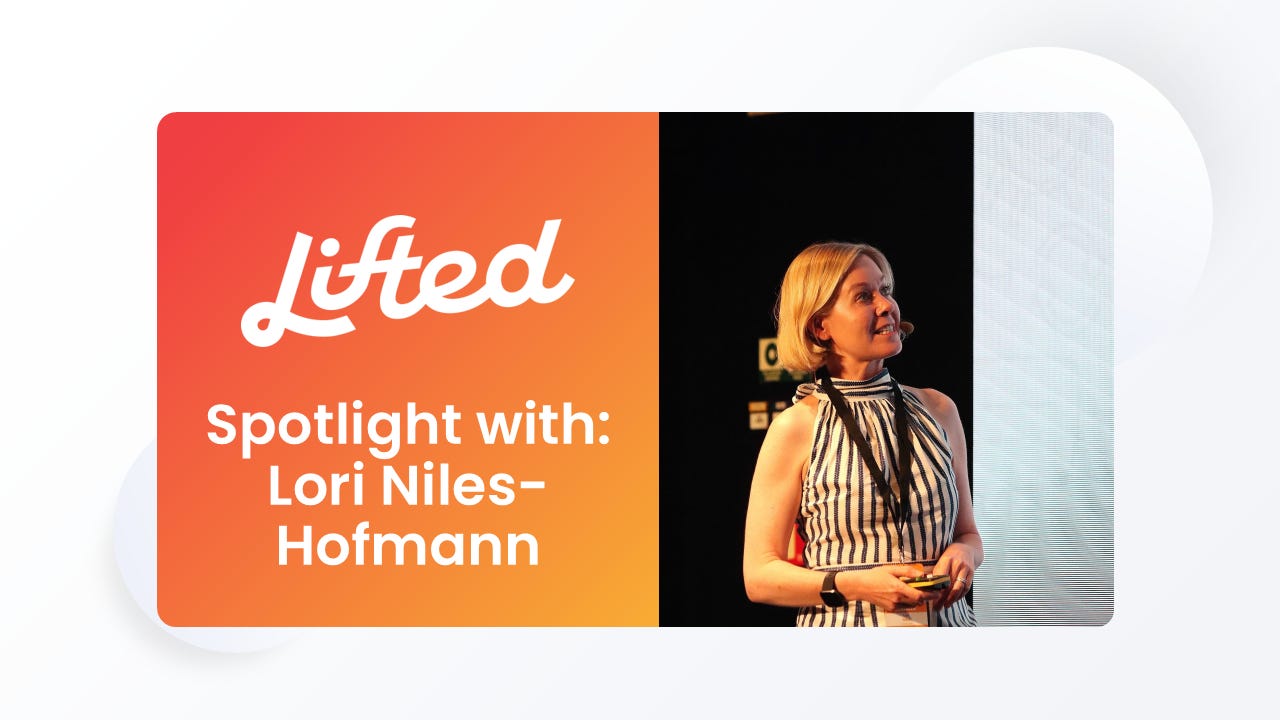
In the edition of Lifted Spotlight, we are delighted to learn more about Lori Niles-Hofmann. Lori is one of the most thoughtful and influential voices shaping the future of learning and development today. Known for her sharp strategic mind and refreshingly practical approach, she has spent more than two decades helping organisations rethink how learning creates real business impact. Her work sits at the intersection of digital transformation, innovation, AI and workforce performance, but what sets Lori apart is her ability to make complex change feel both human and achievable. A trusted adviser, speaker and industry commentator, she continues to inspire L&D leaders to think bigger, act smarter and build learning strategies that truly matter.
Let’s start at the beginning. What was your very first job, and how did it shape your initial thoughts about your career?
My first job was an unusual one. I was not a normal kid (shock, I know), and the instrument I became obsessed with was the pipe organ. One of the perks that came with it was being asked to perform at weddings and funerals in exchange for practice time on pipe organs throughout Toronto. I was probably thirteen or fourteen at the time.
The funerals affected me most. I was being exposed to grief, and I had never seen a dead body before. On the other side, weddings gave me the chance to help people choose music that reflected their relationship. That early experience (probably before I was mature enough to handle it) taught me the difference between performing with a lowercase p and performing with an uppercase P. Some things are really, really, important. It also quickly pushed me out of my goth phase!
Can you share a defining moment or turning point in your life that steered you towards your current career path?
The pivotal moment came when I returned to Canada at twenty-three with no money, having spent time teaching in rural Poland. The best job I could get was a night shift at a bank call centre, fielding calls from people who were either drunk or high and wanted to know why their card wasn’t working. It was not the career I had in mind, but it wasn’t that busy either, and to fight the boredom, I started creating job aids.
A team lead noticed and suggested I apply for a role at BMO’s Institute for Learning: a dedicated campus for employee development with a hotel, classrooms, a gym, a dining hall, collaboration spaces, and the best technology of the era. That was where I became an instructional designer, where I built my first learning on CD-ROMs (no wifi back then!), and where I had my earliest exposure to learning management systems. It was a genuinely remarkable time. Some of my closest friendships and professional relationships to this day came from that place.
Who were some of the key mentors or figures that inspired and guided you during the early stages of your career?
Two people stand out, both from the Institute for Learning. The first is Gina Jeneroux, who eventually became BMO’s Chief Learning Officer. She shaped not just how I thought about learning and technology, but about work and life more broadly. I remember being in a classroom with her once, and I was quietly critical of a facilitator who wasn’t performing well (as only a twenty-three-year-old who thinks she knows everything can be.) She looked at me and said, “There’s a difference between being right and being good.” I was behaving like an idiot, and she was absolutely correct. I have also never heard her raise her voice. For someone as chaotic as I am, I am in awe.
The second was Malcolm Roberts -- the most eccentric person I have ever encountered. He had a signature move: “Come walk with me.” If he chose you for a walk, you knew you were about to be pulled into something wild that would consume your next three weekends. These were phenomenal projects. Without the infrastructure and tools we have now, he was already mapping out what a learning management system should be before they properly existed, just to give an example. Sadly, he passed away a few years ago, but I credit both of them with shaping who I became in this field.
What were some of the biggest challenges or obstacles you faced when starting out, and how did you overcome them?
The first will sound trivial, but it was real: I looked about twelve years old well into my late twenties. Ninety-five pounds, acne, the lot. It was genuinely difficult for people to take me seriously, and combined with significant impostor syndrome, I came across as neither confident nor authoritative. I missed a lot of opportunities because of it. The people who saw what was inside me were rare, and I watched others advance much faster in their careers.
The other challenge is one I still navigate: I am poor at office politics and decoding the subtext of organisational dynamics. I am task-driven and strategically focused -- I see where things should go and I want to execute. But the people layer, and the art of influence, have never come naturally to me. My solution, ultimately, was to become a consultant. I go into a company, work on a specific project, and move on. The stakes are different when you are there to drive a vision rather than climb a ladder. It suits me.
What’s been one accomplishment you are most proud of? and what’s one thing you want to accomplish in the future?
My book. I did not expect to feel as proud of it as I do. It was not just the act of writing; it was the decision behind it. Choosing to leave corporate life, having faith in the ideas that had been accumulating for years, and committing to putting them into a coherent form. That combination of professional courage and intellectual output is something I’m genuinely proud of. Everything in it is mine. Not only the words, but what I went through to get to them.
Looking ahead, I intend to build something in EdTech. In another version of my life, I would have been a product manager, or, as I prefer to call it, a failed product dreamer. There are ideas in my head that are not going to stay there forever.
Looking back, is there any advice you would give to your younger self when you were just starting out in your career?
A lot of people are going to give you bad advice. Ah, how I would love to name names! Sometimes it comes from a place of not understanding you; sometimes it comes from being threatened by you. When a piece of advice lands wrong, take it to three people who are genuinely objective and ask them whether it actually describes you.
I wish I had done that. I stayed in positions far longer than I should have, and I absorbed some genuinely damaging messaging that I had no business internalising. That is the thing I’d most want to go back and change.
Want to know more? Connect with Lori Niles-Hofmann on LinkedIn to explore their unique insights further and stay up-to-date with all their latest initiatives.